

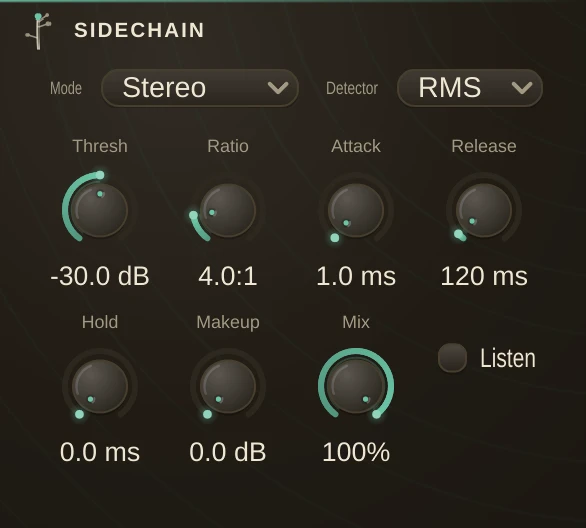
A sidechain (ducking) compressor in the spirit of the cheap nineties rack box behind the pumping-house sound. The Main signal is compressed by the level of the Key input: kick on the key, bass or pad on the main, and the main pumps in time with the kick.
Inlets (stereo mode)
| 1-2 | Main - what gets ducked, and what you hear at the outlets. |
| 3-4 | Key - the trigger. A detector tap only: it never passes through, so route the kick to your mixer on its own cord as well. |
Detector
| RMS | the signature setting: the detector averages the key, so the reduction grabs late and lets go lazily - the breathing, pumping character the original unit is famous for. Default. |
| Peak | rides every transient exactly - tight, surgical, ripple-free. |
Dialing it in
| Mode | switches stereo and mono in place, keeping the name, settings and automation. The inlets change meaning: in mono, inlet 1 is Main and inlet 2 is Key, so re-check your cords after switching. |
| Listen | monitors what the key receives; set Threshold so the kick clearly crosses it, then switch Listen back off. |
| Ratio | the duck depth - 4-8 for a clear pump, higher for hard styles. |
| Attack | keep fast (a few ms) so the kick's transient punches through. |
| Release | the groove control: ~150-250 ms lets the main swell back in before the next kick. |
| Mix | below 1.0 = parallel ducking, for subtler movement. |
An unconnected key means no reduction - the main passes through untouched.
If you want a duck that is identical on every hit regardless of how the kick is tuned, reach for SideKick: its trigger input fires a fixed envelope instead of following the key's level.